Search This Blog

Goodluck Jonathan Biography

Quick Facts

Name
Goodluck Jonathan
Occupation 
Nigeria Governor, Vice President, President.
Birth Date
November 20, 1957.
 
Home Town
Otuoke, Nigeria.
Place of Birth 
Bayelsa, Nigeria
Full name 
GoodLuck Ebele Azikiwe Jonathan
http://upload.wikimedia.org/wikipedia/commons/4/42/Goodluck_Jonathan_World_Economic_Forum_2013.jpg

Synopsis
Born on November 20, 1957, President Goodluck Ebele Jonathan,currently is the President of Nigeria. He is a former zoologist who became Nigeria’s vice-president in the year 2007. He was the Governor of Bayelsa State from Dec 9, 2005 to May 28, 2007, and was sworn in as the Vice President of the Federal Republic of Nigeria on 29 May 07. He became the official President of Nigeria in May 6,year 2010,This comes as the nation prepares to bury its former leader Umaru Yar’Adua who died on the 5th of May 2010, after a prolonged illness that saw his Vice-President stepped in to his shoes as Acting President. There had been tension in the country as rival political groups fight to assert authority in what was seen as a power vacuum during the period of the illness of Yar’Adua.

Early Life
Jonathan, of the Ijo (Ijaw) ethnic group and a devoted Christian, he was born and raised in Niger delta which is now Bayelsa state. He went to Christian primary and secondary schools in the area and later attended the University of Port Harcourt.
He graduated with a B.S. in zoology in 1981, an M.S. in hydrobiology and fisheries biology (1985), and a Ph.D. in zoology (1995). During his university education, he also taught at Rivers State College of Education from 1983 until 1993. He then served as an assistant director at the Oil Mineral Producing Areas Development Commission, a now defunct government agency, from 1993 until 1998.

Political Career
Jonathan Goodluck’s political career began when he became involved with the nascent People’s Democratic Party (PDP) in the late 1990s. He was elected deputy governor of Bayelsa state in 1999 under the party’s banner. He served in the position until year 2005, when he was elevated to the governorship after the incumbent was charged with corruption and impeached. In 2007 he was selected to be the vice presidential running mate of the PDP’s presidential candidate, Umaru Musa Yar’Adua. He and Yar’Adua were elected in April and inaugurated in May. He became vice-president of Nigeria in the year 2007.
On Sunday 29th of May 2011, Goodluck Jonathan Ebele Officially sworn in as the President of Federal Republic of Nigeria'

He contested and lost the 2015 General election to APC candidate Muhammadu Buhari,
making him the first ever Nigeria incumbent President to have ever loosed an election.
Personal Life
He is happily married to Patience Jonathan and has 2 children.
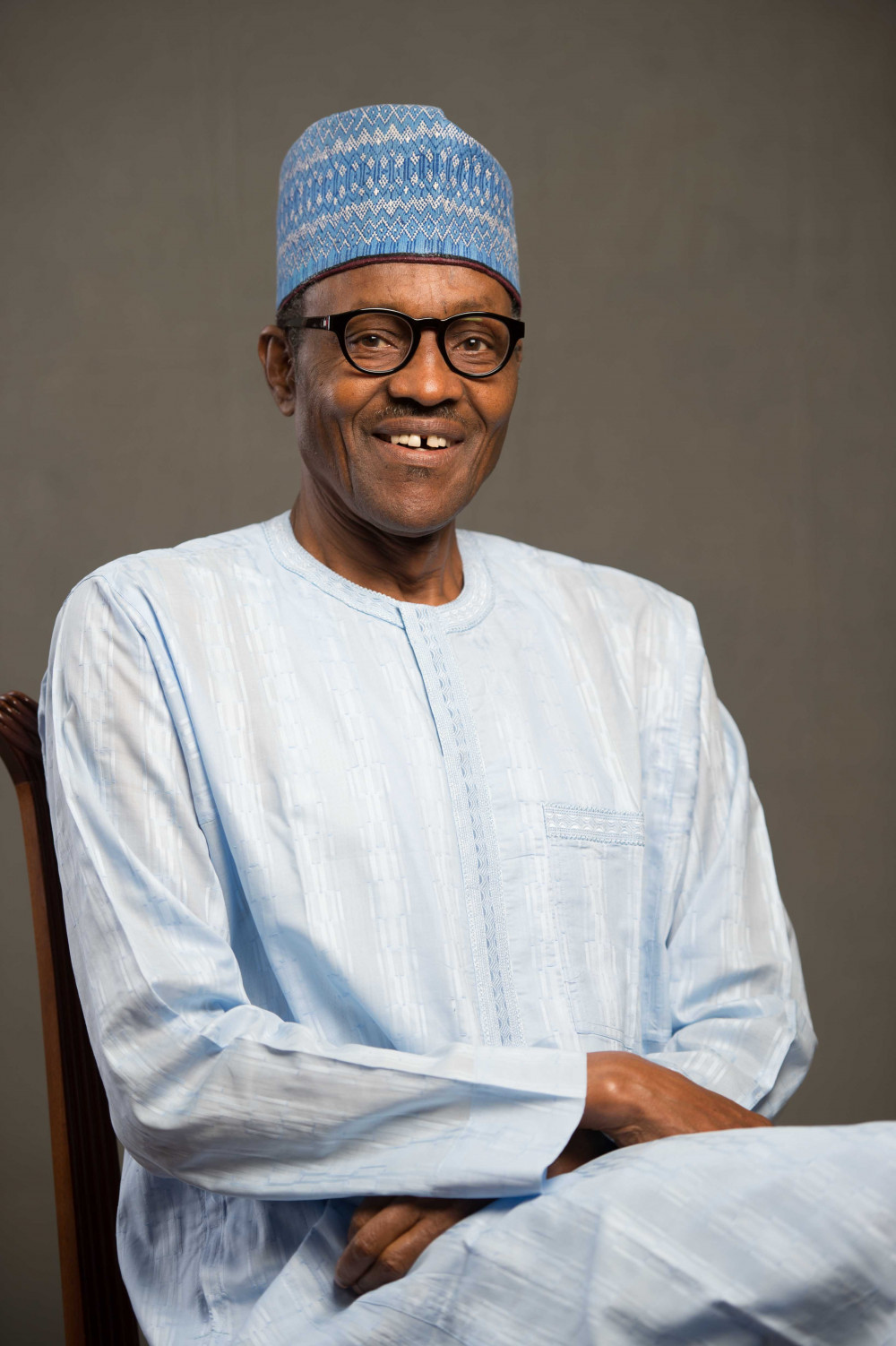
Muhammadu Buhari Biography


Quick Facts

Name
Buhari
Occupation 
Nigerian President, military leader and politician .
Birth Date 
December 17, 1942.
 
Home Town
Abeokuta Ogun, Nigeria.
Place of Birth 
 Daura, Nigeria
Full name 
Muhammadu Buhari
 http://www.bellanaija.com/wp-content/uploads/2014/11/Buhari-2015-BN-9.jpg
 
Muhammadu Buhari, also spelled Muhammad Nigerian military leader and politician, who served as head of state (1984–85).

Synopsis 
Educated largely in Katsina, Buhari took military training in Kaduna as well as in Great Britain, India, and the United States. He was involved in the military coup that ousted Yakubu Gowon in 1975 and was appointed military governor of North Eastern state (now Borno) that same year.

He was appointed federal commissioner for petroleum resources by Gen. Olusegun Obasanjo, who became military head of state when Gowon’s successor, Murtala Mohammed, was assassinated in 1976. By 1977 Buhari had become the military secretary at Supreme Military Headquarters, which was the seat of government.

By September 1979 he had returned to regular army duties and commanded a division based in Kaduna. Although civilian government had returned to Nigeria in 1979 with the election of Shehu Shagari, dissatisfaction with dismal economic conditions and what the military perceived as corrupt politicians led to another military coup on December 31, 1983, and Buhari was chosen unanimously to be the new head of state.

Many of the economic problems that had existed under the Shagari administration also plagued the Buhari regime, and Buhari instituted austerity measures. He took a tough stance on corruption: during his tenure, hundreds of politicians and business officials were tried and convicted or awaited trial on corruption-related charges. His regime launched the “War Against Indiscipline,” a program which sought to promote positive values in Nigerian society, although authoritarian methods were sometimes used in the program’s implementation. In an effort to stop dissent against his policies, Buhari instituted restrictions on the press, political freedoms, and trade unionists.

Although many Nigerian citizens had initially welcomed Buhari’s efforts to root out corruption and improve societal values, the repressive measures employed by his regime, against a backdrop of continuing economic troubles, led to discontent. By August 1985 even the military had had enough, and on August 27 Maj. Gen.
Ibrahim Babangida took control of the government. Buhari was detained in Benin City but was released at the end of 1988.

In 2003 Buhari ran for president and was defeated by the incumbent, Olusegun Obasanjo of the People’s Democratic Party (PDP). Buhari ran again in 2007 but was defeated by the PDP’s candidate, Umaru Yar’Adua, in an election that was strongly criticized by international observers as being marred by voting irregularities. Buhari also stood in the 2011 presidential election, which was praised for largely being transparent, free, and fair, but he again lost to the PDP’s candidate, incumbent Goodluck Jonathan.

In 2014 the All Progressives Congress (APC) party nominated Buhari to stand as its candidate in the 2015 presidential election. His reputation for being incorruptible and his military background made him an attractive candidate, whom many Nigerians hoped might be able to more effectively handle the threat posed by the Islamic militant group Boko Haram, whose violent acts had terrorized parts of the country in recent years.
In the march 28,2015 election which was earlier slated to hold for February 14, he came out victorious under the APC, defeating PDP incumbent president Goodluck Jonathan. He set a record of being the first to have ever defeated an incumbent President. .

Featured post

NIGERIA IN BRIEF

Nigeria is officially called "The Federal Republic of Nigeria". It is a federal constitutional republic comprising of 36 states a...